
There are three main legal ways to take money out of a Polish sp. z o.o.: dividends (19% flat PIT, no ZUS, not deductible for the company), board member remuneration under appointment (12%/32% PIT + 9% health insurance, deductible), or leasing your private assets to the company (8.5% lump-sum tax up to PLN 100,000, then 12.5%). Each method carries different tax consequences — and in most cases, combining them delivers the lowest overall tax burden.
Why does withdrawing profit from a sp. z o.o. require planning?
A sp. z o.o. is a separate legal entity. Its profit does not automatically belong to you. To move money into your personal account, you must choose a legal withdrawal method — and each one is taxed differently.
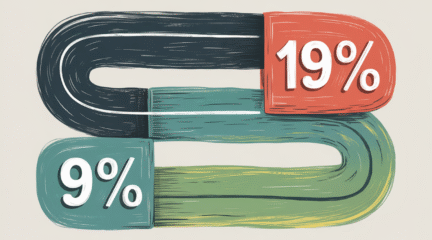
The “double taxation” problem works like this: the company first pays CIT on its income (9% or 19%), and then the shareholder pays 19% PIT on the dividend received. The combined effective rate reaches 26.29% at CIT 9% or 34.39% at CIT 19%. Other withdrawal methods can legally reduce this burden. More about business forms and taxation in Poland is available at biznes.gov.pl.
| Withdrawal method | PIT rate | Health insurance | Social security (ZUS) | Deductible for the company (lowers CIT) |
|---|---|---|---|---|
| Dividend | 19% flat | No | No | No |
| Board remuneration (appointment) | 12% / 32% progressive | 9% | No | Yes |
| Private lease | 8.5% / 12.5% lump-sum | No | No | Yes |
From our experience at Progress Holding, the majority of small sp. z o.o. owners rely exclusively on dividends — and end up paying tens of thousands of PLN more in tax each year than they need to.
How does a dividend payment work in a sp. z o.o.?
A dividend is a share of the company’s net profit distributed to shareholders after the annual financial statements are approved and a profit distribution resolution is adopted. The company withholds 19% flat PIT from the dividend. Dividends are not subject to any ZUS or health insurance contributions.
Conditions for paying a dividend
- The financial statements for the fiscal year must be approved by the shareholders’ meeting (Articles 191–198 of the Commercial Companies Code).
- The shareholders’ meeting must pass a resolution on profit distribution.
- The dividend is paid proportionally to shares held (unless the articles of association provide otherwise).
- The company, acting as a withholding agent, deducts 19% flat PIT (Article 30a(1)(4) of the PIT Act) and remits it to the tax office.
Advantages of dividends
- No ZUS or health insurance. Dividends are completely free from social security and health contributions.
- Simple formalities. One resolution per year and a bank transfer — no monthly payroll processing.
- Advance dividend payments are possible during the year (if allowed by the articles of association and last year’s financial statements show a profit).
Disadvantages of dividends
- Double taxation. Company CIT + 19% personal PIT. Effective rate: 26.29% (at CIT 9%) or 34.39% (at CIT 19%).
- Not deductible for the company. A dividend does not reduce the CIT tax base.
- Profit-dependent. You cannot pay a dividend if the company reported a loss.
How does board member remuneration under appointment work?
Remuneration granted to a board member by a shareholders’ resolution is taxed under the general progressive scale (12% up to PLN 120,000 of annual income, 32% above) plus a 9% health insurance contribution. It is not subject to social security contributions (ZUS). It qualifies as a tax-deductible cost for the company. The rules stem from Article 13(7) in conjunction with Article 27 of the PIT Act.
How it works in practice
A shareholder who also serves as a board member receives remuneration based on a resolution — no employment contract or civil-law agreement is needed. The remuneration can be paid monthly or as a one-off annual bonus. The company withholds PIT and the health contribution.
Why is this often better than a dividend?
Board remuneration reduces the company’s taxable income — and therefore its CIT liability. With the right amount, the company can bring its CIT base down to zero. The 12% PIT rate plus 9% health contribution totals roughly 21% — less than the combined tax on a dividend.
Additionally, the board member benefits from the tax-free allowance of PLN 30,000 per year. For income up to PLN 120,000, the PIT rate is 12%. Only amounts above this threshold are taxed at 32%.
What to watch out for
- The 9% health contribution is not deductible from tax. This is an extra cost not present with dividends.
- A sole shareholder who is also the sole board member of a single-member sp. z o.o. is subject to mandatory full ZUS contributions (treated as a self-employed person). This changes the calculation entirely. Following the Supreme Court resolution of 21 February 2024 (III UZP 8/23), having two shareholders formally prevents the company from being classified as single-member.
- The remuneration must be reasonable — it should correspond to the actual scope of the board member’s duties. Grossly inflated compensation may be challenged by the tax authorities.
How does leasing your private assets to the company work?
A shareholder can lease private assets — real estate, a car, equipment — to the company and tax the rental income under the lump-sum regime: 8.5% on the first PLN 100,000 of annual rental income and 12.5% above that threshold (Article 12(1)(4.1) of the Lump-Sum Tax Act). The rent is deductible for the company.
Why is private leasing tax-efficient?
This is one of the lowest-taxed ways to extract money from a sp. z o.o. The 8.5% lump-sum rate is significantly lower than 19% PIT on dividends or 12% PIT on board remuneration. At the same time, the rent reduces the company’s income and lowers its CIT.
Example: You lease your office space to the company for PLN 5,000 per month (PLN 60,000 per year). The company deducts PLN 60,000 from its taxable income. At CIT 9%, this saves PLN 5,400. You pay 8.5% lump-sum tax on PLN 60,000 = PLN 5,100. Total tax: PLN 5,100 instead of approximately PLN 15,780 if the same amount were distributed as a dividend.
Safety requirements
- The rent must be at market rate. An inflated rent may be challenged by the tax office as a related-party transaction.
- The leased asset must be used in the company’s business. Leasing a car that never goes to client meetings has no business justification.
- Private lease (outside a business activity) — if you lease personal assets rather than business ones, you apply the 8.5%/12.5% lump-sum rate. You do not need to register a business activity for this.
- Documentation. A lease agreement, handover protocol and invoices or receipts — everything must be properly documented.
In our clients’ practice at Progress Holding, the most common scenarios are leasing office space or an apartment used as the company’s registered address, and leasing a personal car. Both are safe as long as the rent matches market rates.
Which option gives the lowest tax?
There is no single universal answer — the optimal model depends on the withdrawal amount, shareholder structure and available assets. The table below compares the three methods for an annual withdrawal of PLN 120,000 by a small CIT taxpayer (9%).
| Parameter | Dividend | Board remuneration (appointment) | Private lease (lump-sum) |
|---|---|---|---|
| Gross withdrawal amount | PLN 120,000 | PLN 120,000 | PLN 120,000 |
| Deductible for the company (CIT saving) | No | Yes — PLN 10,800 saved (9% × 120,000) | Yes — PLN 10,800 saved (9% × 120,000) |
| Shareholder’s PIT | PLN 22,800 (19%) | PLN 10,800 (12% minus tax-free allowance) | PLN 10,200 (8.5% on 100,000 + 12.5% on 20,000) |
| Health insurance | PLN 0 | PLN 10,800 (9%) | PLN 0 (private lease) |
| Social security (ZUS) | PLN 0 | PLN 0 (appointment) | PLN 0 |
| Total tax burden (PIT + ZUS + no CIT deduction) | ~PLN 33,600 | ~PLN 10,800 | ~PLN 0 net (CIT saving offsets lump-sum tax) |
| Net amount available | ~PLN 97,200 | ~PLN 98,400 | ~PLN 109,800 |
Note: This is a simplified calculation for illustration purposes. Actual amounts depend on individual tax circumstances, cost structure and other sources of income.
Can you combine different withdrawal methods?
Yes — and this is the optimal approach. Combining several methods lets you spread the tax burden and take advantage of each one’s preferential treatment. There is no rule prohibiting a shareholder from receiving board remuneration, rental income and a dividend at the same time.
Blended model — example
A shareholder and board president of a sp. z o.o. (small taxpayer, CIT 9%) wants to withdraw PLN 300,000 per year. An optimal split might look like this:
- Board remuneration: PLN 120,000/year (PLN 10,000/month). PIT 12% (full use of the lower bracket), health contribution 9%. Deductible for the company.
- Office lease: PLN 60,000/year (PLN 5,000/month). Lump-sum 8.5%. Deductible for the company.
- Dividend: PLN 120,000/year from net profit. PIT 19%, no ZUS. Paid after approval of the financial statements.
This model produces a lower total tax burden than withdrawing PLN 300,000 purely as a dividend. We have run hundreds of these calculations at Progress Holding, and a well-structured blended model saves the shareholder between PLN 20,000 and PLN 80,000 in tax per year — depending on the withdrawal amount and asset structure.
What does this look like in practice? Progress Holding’s experience
Based on our accounting services for over 500 sp. z o.o. companies, we have analysed how our clients withdraw profits and what mistakes they make most often.
Data from our client portfolio
- Around 45% of shareholders use dividends exclusively — usually because they were unaware of other options or feared the risk.
- Around 35% use a blended model (board remuneration + dividend). This is the most common setup after an initial consultation with our team.
- Around 15% add a private asset lease — mainly office space or a car. This generates the largest savings at relatively low risk.
- Around 5% also use recurring non-cash contributions — but this form requires careful documentation and does not suit every company.
Three most common mistakes
- No board remuneration despite working full-time in the company. The shareholder works eight hours a day but formally receives no salary, waiting for the year-end dividend. Result: significantly higher tax than necessary.
- Inflated lease rent. The shareholder leases an apartment to the company for PLN 8,000/month in a city where the market rate is PLN 3,500. The tax office may challenge the excess as a disguised profit transfer.
- Board remuneration above PLN 120,000 without analysis. Once income exceeds PLN 120,000, the PIT rate jumps to 32%. Without a calculation, the shareholder may pay more tax than if the excess had been distributed as a dividend.
Each of these mistakes has a measurable cost. At Progress Holding, we prepare an individual optimal withdrawal model for every new company we take on for accounting services.
How much does accounting support for withdrawal optimisation cost?
Ongoing accounting services for a sp. z o.o. at Progress Holding start at PLN 799 net per month. This includes CIT advance calculations, board remuneration processing, lease records and the annual financial statements with the CIT-8 return (from PLN 1,500 net). The current price list is available at progressholding.pl.
Frequently asked questions
Are dividends subject to ZUS contributions?
No. A dividend paid to a sp. z o.o. shareholder is not subject to any social security or health insurance contributions. The only charge is 19% flat PIT, withheld and remitted by the company as the tax agent.
Is board remuneration under appointment subject to ZUS?
It is not subject to social security contributions (pension, disability, sickness, accident). Since 2022, however, it is subject to a 9% health insurance contribution. This contribution is not deductible from tax.
Can I lease my apartment to the company and pay the 8.5% lump-sum tax?
Yes, provided the lease qualifies as private rental (outside a registered business activity). The lump-sum rate is 8.5% on the first PLN 100,000 of annual rental income and 12.5% above that. The rent must correspond to market rates, and the property must actually be used by the company.
Can a sole shareholder of a single-member sp. z o.o. receive board remuneration without ZUS?
Not fully. The sole shareholder of a single-member sp. z o.o. is treated by ZUS as a self-employed person — meaning full social security contributions are mandatory. This issue does not arise in companies with two or more shareholders.
How much can I save by combining dividends with board remuneration?
For an annual profit of PLN 200,000 (small taxpayer, CIT 9%), a blended model (PLN 120,000 board remuneration + PLN 80,000 dividend) can save approximately PLN 15,000–25,000 per year compared with paying everything as a dividend. The exact figure depends on your individual tax situation.
Can the tax office challenge a lease to my own company?
Yes — if the rent is inflated, the asset is not used in the company’s business, or the transaction lacks a business rationale. The key points: apply market rates, document the agreement and the actual use of the asset. At market prices with genuine use, this arrangement is fully legal and safe.
The optimal way to withdraw profit from a sp. z o.o. is not a single method, but a carefully designed combination. Dividends offer simplicity and no ZUS. Board remuneration lowers CIT and benefits from the 12% PIT rate. Private leasing provides the lowest lump-sum rate of 8.5%. The right proportion of these three elements can save your company between PLN 20,000 and PLN 80,000 in tax per year.
Need an individual calculation or ongoing accounting support? Contact us at Progress Holding: +48 603 232 418 or office@progressholding.pl. We serve over 500 companies and have been helping entrepreneurs in Poland withdraw profits legally and tax-efficiently for over 20 years.